Welcome to Albuquerque Bird Control: Prevention and Removal of Unwanted Birds
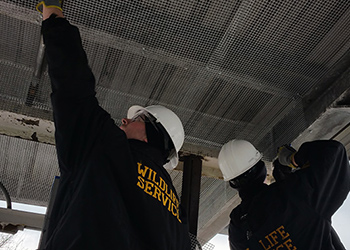
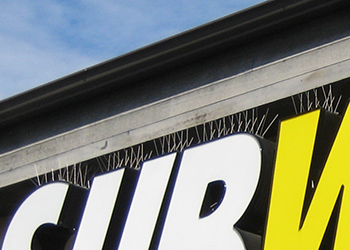
Our company specializes in resolving problems caused by birds in Albuquerque, New Mexico, both residential and commerical. We handle bird species such as pigeons, starlings, grackles, sparros, and even Canada Geese and woodpeckers. We generally don't kill birds - we prevent them from causing problems. Most commonly, this means that we install barriers that prevent them access to your building or property, or anti-roosting devices that prevent them from landing, nesting, or roosting on your home, store, building, or anywhere. We use netting, needle strips, shock track, and more. We do offer trapping in some cases, and removal of birds from warehouses, grocery stores, or other commerical or industrial buildings by netting or sometimes pellet shooting. We have a wide variety of tools and methods for solving every manner of bird problem. Call us at 505-303-4514 to discuss your bird problem today.Our Work
Full Range of Bird Control Services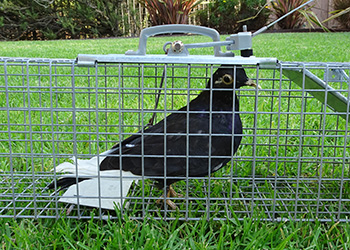
More About Us Albuquerque Bird Control:
For over ten years, our company has been providing the community and the nearby cities with innovative solutions to their bird problems. We have experience in handling a variety of bird problems for both residential and business owners. We have developed unparalleled technical expertise when dealing with the birds. From the detection, exclusion, capture, identification, removal, and sanitation. We can even conduct home modifications that will make your home less desirable in the eye of these birds. No other company can provide you with the same comprehensive service. Our team will be supported by in-house development and research experts who will conduct the on-site inspection. We are requiring all our technicians to go through regular training and seminars to ensure that they can provide the updated methodologies and use the latest tools and equipment for a humane and efficient removal and exclusion of these birds. We will only provide you with the highest standard of bird elimination service. All our professionals are state-licensed and certified to conduct safe removal. We can even recommend the best course of action if you are housing a protected bird species. At our company, your concern is our concern. We will respect you, your property, and your time.The Commonly Missed Area of Pigeon Control You Shouldn't Forget About
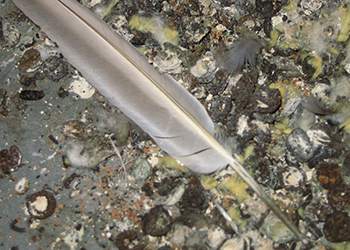
There are plenty of approaches that you could look upon for pest pigeon control, as well as the control of other birds, but there is one very important part that so many people fail to complete properly. This part is the cleanup and disinfecting of contaminated materials, including nests, pigeon feces, feathers, and even carcasses.
What happens if I don't clear away pigeon feces and mess?
To start with, pigeon feces is corrosive. It'll burn through the materials it comes into contact with, providing there is enough of the feces. One pigeon's droppings probably won't do all that much damage, but when you have a flock of them that can be tens and potentially hundreds of pigeon strong, you would very quickly find yourself looking at a very big buildup of pigeon poop, and a lot of damage caused as a result.
Taking out the corrosive nature of this pigeon waste, feces from wild critters is also very well known for spreading around a string of diseases, all of which can be hazardous to health. This applies to not just other animals, but also humans, including your kids and relatives in the same building. These diseases can be transmitted by direct contact, through contamination of water and soil sources, and also through inhalation in some cases. It is definitely recommended that you steer well clear of all bird feces, and just the feces or waste material of pest/wild animals entirely.
Of course, one of the biggest problems that you'll face when you DON'T clean up the pigeon feces, is that it will attract a whole bunch of other animals, including rodents. Scavengers and rodents are drawn to decomposing carcasses, such as what you would find within a large enough flock of pigeons. Whenever you have a group of animals, it is without doubt that one of those animals will die at some point, either from predatory attack, disease, or other natural causes. This is definitely the case when you're looking at a BREEDING group of animals, and a flock of pigeons can breed throughout the year if the conditions are just right. Very rarely will all young animals survive. That's why rats, rabbits, birds, etc. have multiple births. It ensures that at least one of the youngsters will survive, thus continuing the species.
The nests, food remnants, feces, and decomposing carcasses of these birds will attract not just rodents and other scavengers/pests, but insects, too. Just one more reason why it is vitally important that you remove the mess and destruction these birds leave behind, alongside getting rid of them and preventing them from ever coming back.
We have the most experience in Albuquerque at understanding the nuisance birds of New Mexico. Our 7 years of experience in the field ensures excellent results.
We pride ourselves on the quality of our bird control work. Our work is professional grade and long lasting, usually for the life of the building.
We are fully New Mexico licensed. We carry the correct safety equipment, and operate in a safe and professional manner to keep your building and people safe.
Call us at 505-303-4514 to discuss your bird problem and our process. We are always responsive by phone. We can usually schedule next-day appointments, and provide written estimates for all our bird work.
Thank you Albuquerque Bird Control for keeping the pigeons off of my storefront. My sidewalks are clean now!
These guys were the only ones who could get a sparrow out of my clothing store. Thank you!
Your goose abatement program has kept my golf course dropping-free. I recommend Albuquerque Bird Control.